Ex IIC T4 Explained: Explosion-Proof Roller Shutters
What Ex db eb IIC T4 Gb and Ex tb IIIC T130 °C Db mean on the CUBIXY explosion-proof roller shutter, and why explosion-proof is not blast-resistant.
Published By CUBIXY
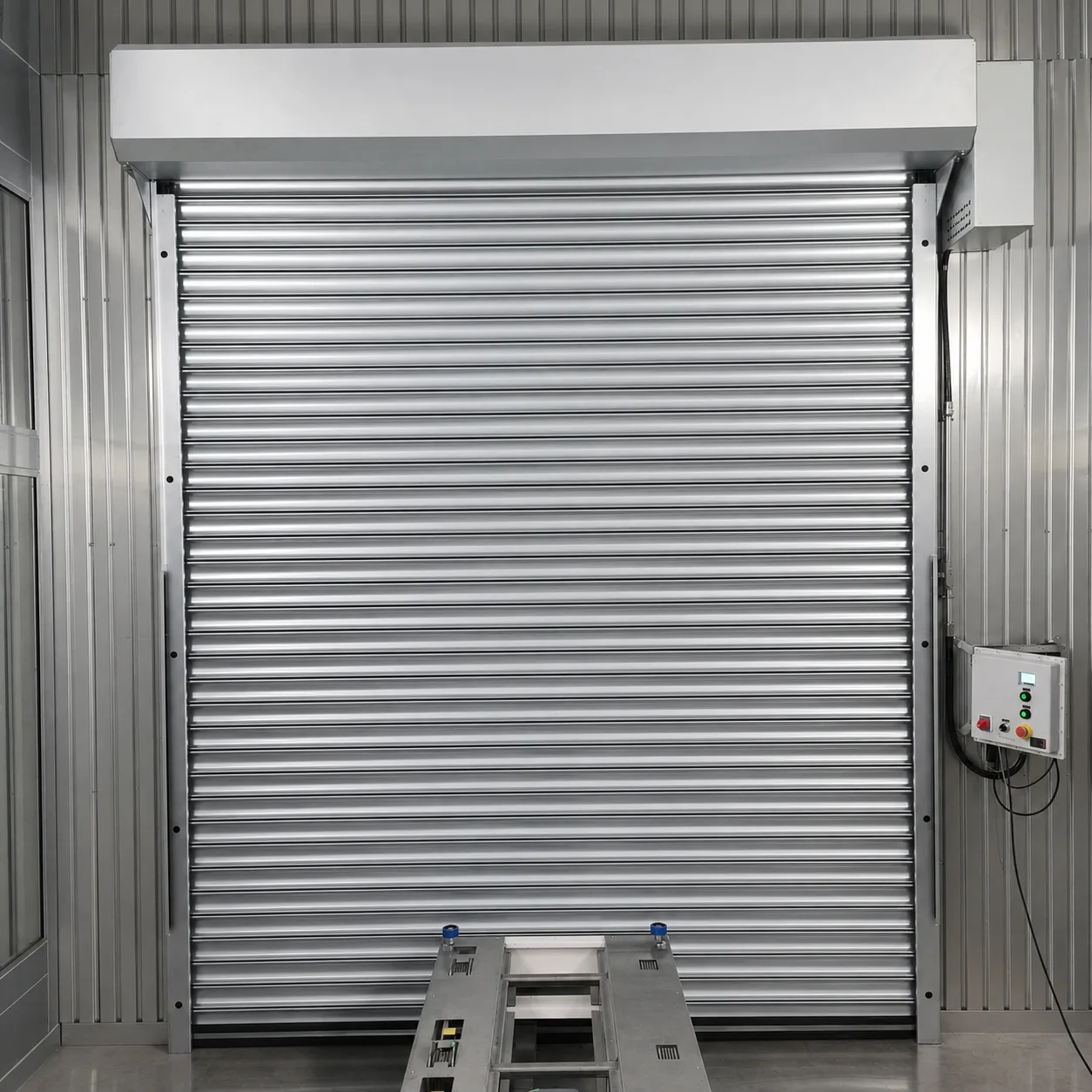
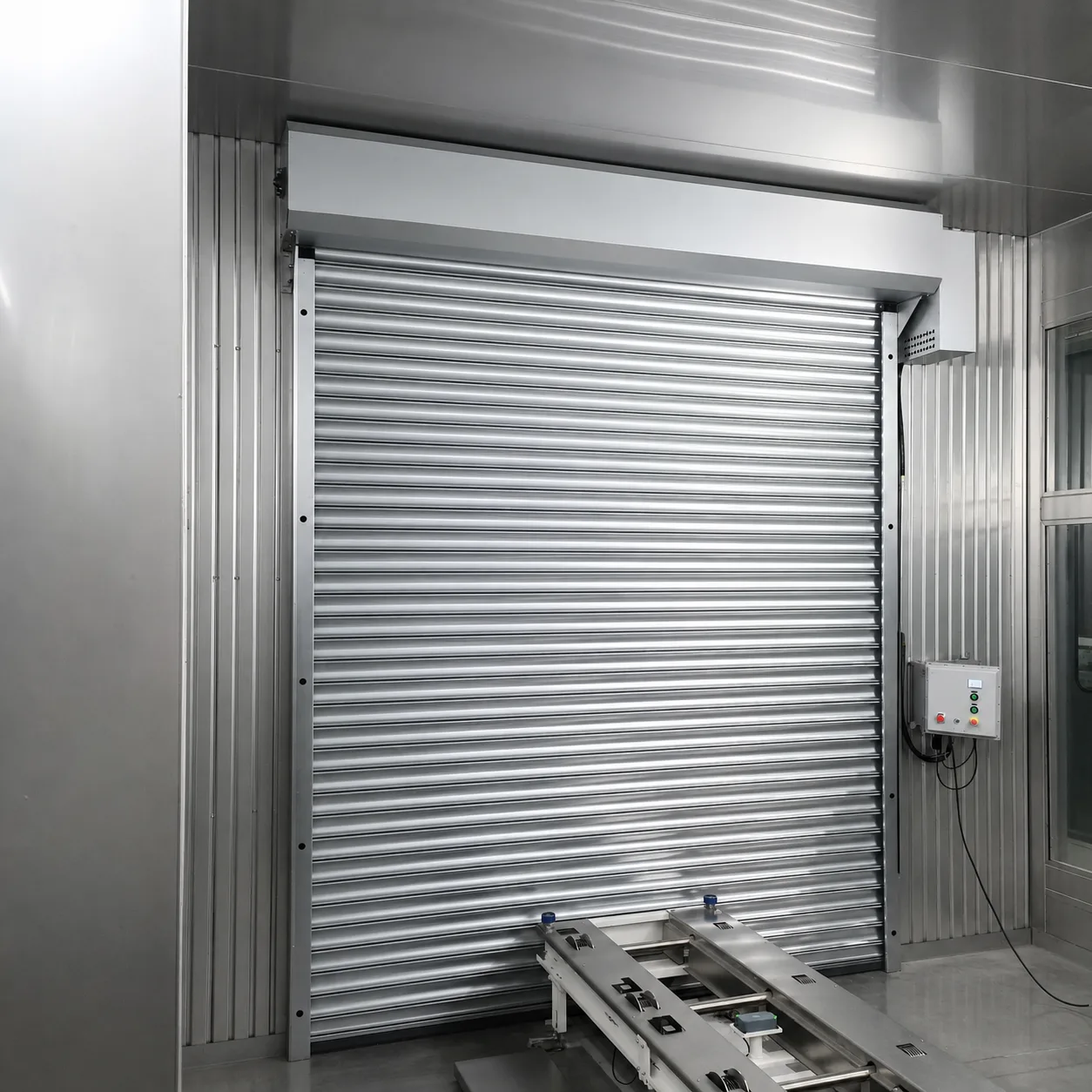
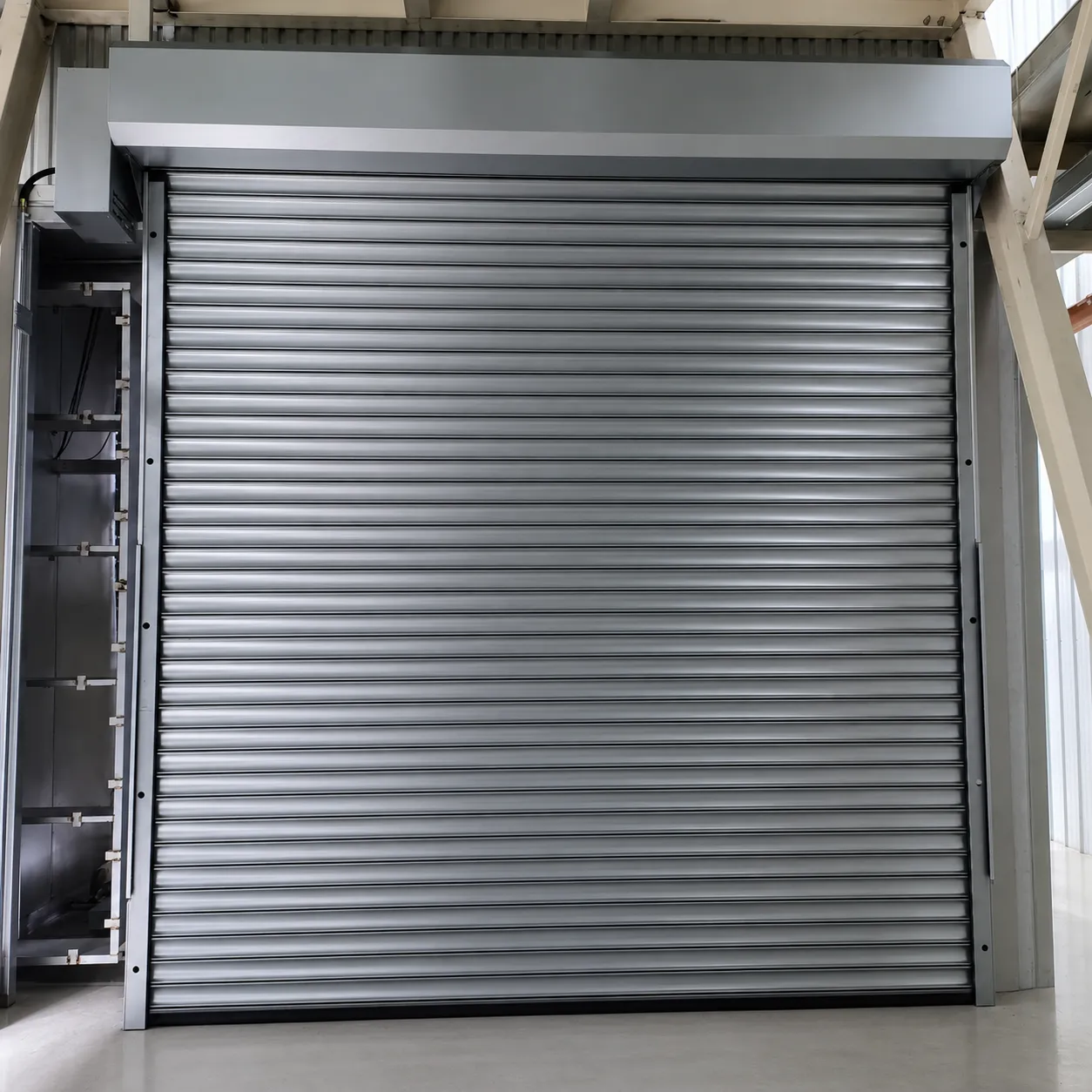
The CUBIXY Steel Explosion-Proof Roller Shutter Door is certified by CNEx as a complete door assembly with two explosion-protection markings: Ex db eb IIC T4 Gb for explosive gas atmospheres and Ex tb IIIC T130 °C Db for combustible dust. It is not for coal mines or underground mines. This article explains what each part of the markings means, and what an explosion-proof door does and does not do.
The certificate
| Item | Details |
|---|---|
| Certificate | CNEx25.3526X, complete door assembly |
| Issued by | Nanyang Explosion Protected Electrical Apparatus Research Institute / CNEx |
| Standards | GB/T 3836.1, 3836.2, 3836.3 and 3836.31-2021 |
| Gas marking | Ex db eb IIC T4 Gb |
| Dust marking | Ex tb IIIC T130 °C Db |
| Valid until | 13 August 2030 |
| Holder | Our partner factory that manufactures the door |
Reading Ex db eb IIC T4 Gb
| Part | Meaning |
|---|---|
| Ex | Equipment for explosive atmospheres |
| db | Flameproof enclosure ("d"), protection level b: an internal ignition is contained inside the enclosure |
| eb | Increased safety ("e"), protection level b: measures that prevent sparks and hot surfaces |
| IIC | Equipment group II (explosive gas atmospheres other than mines), gas group IIC. IIC is the most demanding gas group, so IIC equipment also covers IIA and IIB gases |
| T4 | Temperature class: maximum surface temperature 135 °C, for gases whose ignition temperature is above 135 °C |
| Gb | Equipment protection level Gb, for Zone 1 and Zone 2 gas areas |
Reading Ex tb IIIC T130 °C Db
| Part | Meaning |
|---|---|
| tb | Protection by enclosure ("t"), protection level b: the enclosure keeps dust out |
| IIIC | Equipment group III (combustible dust), dust group IIIC (conductive dust), which also covers IIIA and IIIB |
| T130 °C | Maximum surface temperature 130 °C |
| Db | Equipment protection level Db, for Zone 21 and Zone 22 dust areas |
Why not coal mines
Mines with firedamp are equipment group I, a separate group from the group II and III markings above. The door is not certified for coal mines or underground mines.
Explosion-proof is not blast-resistant
An explosion-proof (Ex) door is designed so that its own electrical equipment, such as the motor, controller and switch box, cannot ignite the explosive atmosphere around it. It is not designed to withstand the pressure wave of an explosion. Do not use it where a blast-resistant door is required.
What is explosion-proof on the CUBIXY door
- All components are explosion-proof rated: explosion-proof controller (IP65), explosion-proof motor (380 V, 50 Hz) and explosion-proof, anti-corrosion switch box (IP65).
- Control: push button. Opening and closing speed 0.1 m/s.
- Curtain slats: PPS 100 in 1.2 mm, or PDI 100 / SDI 100 in 0.8 mm with fireproof filler.
Matching the door to your site
Suitability for a specific site is confirmed against its hazardous-area classification, gas group and temperature class. Include them in your enquiry: the zone (for example Zone 1 or Zone 21), the gas or dust and its group, and the required temperature class. See How to Request an Industrial Door Quotation.
Frequently Asked Questions
- What does Ex IIC T4 mean?
- Ex marks equipment for explosive atmospheres. IIC is the most demanding gas group, so the equipment also covers IIA and IIB gases. T4 means a maximum surface temperature of 135 °C, for gases that ignite above 135 °C.
- Is an explosion-proof door the same as a blast-resistant door?
- No. An explosion-proof door is designed so that its own electrical equipment cannot ignite the surrounding explosive atmosphere. It is not designed to withstand the pressure wave of an explosion.
- Can the CUBIXY explosion-proof roller shutter be used in coal mines?
- No. It is certified for explosive gas atmospheres (Ex db eb IIC T4 Gb) and combustible dust (Ex tb IIIC T130 °C Db), not for coal mines or underground mines.